Director's Message

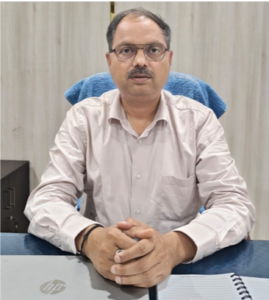
Dr. Raghavendra Singh

Director (ICAR-Mahatma Gandhi Integrated Farming Research Institute (MGIFRI), Piprakothi- 845429, Motihari, East Champaran, Bihar)

Waterlogging and recurrent flooding remain among the most critical challenges affecting agriculture and rural livelihoods in eastern India. Across the country, nearly 113 million people—about 9% of the population—are vulnerable to flood and waterlogging hazards, which adversely impact agricultural lands, crops, livestock, forests, infrastructure, and human health. Excess water creates anaerobic conditions in the root zone, disrupting nutrient uptake, crop growth, and overall ecosystem productivity. Available estimates indicate that nearly 11.6 million hectares of land in India are affected by perennial or seasonal waterlogging.

Vision

Sustainable management of natural resources and diversified farming for achieving food, nutrition and livelihood security in the country.

Mission
Developing site-specific, cost-effective and demand-driven integrated farming systems for flood-prone and waterlogged ecosystems.
Mandates
  • Adaptive research for location-specific integrated farming system models (fish-based) for flooded, flood-prone and wetland ecology.
  • Centre for vocational and advanced training to the farmers to promote fish-based integrated farming systems.
Latest Notifications
Our Objective
  • To develop and demonstrate location-specific and farmer-centric integrated farming wherein fishery will be given due importance.
  • To act as a repository of information and its dissemination on all aspects of integrated farming.
  • To facilitate and promote coordination and dissemination of the technology for integrated farming through network/consortia approach involving ICAR institutes, state agricultural universities, and other agencies.
  • Promote network and consortia research in the field of integrated farming.
  • To provide scientific leadership and act as a center for vocational as well as advanced training to promote the technologies related to integrated farming.
  • To collaborate with relevant national and international agencies in liaison with state and central government departments for technology dissemination.
  • To provide need-based consultancy and advisory support in promoting integrated farming.
Skip to content